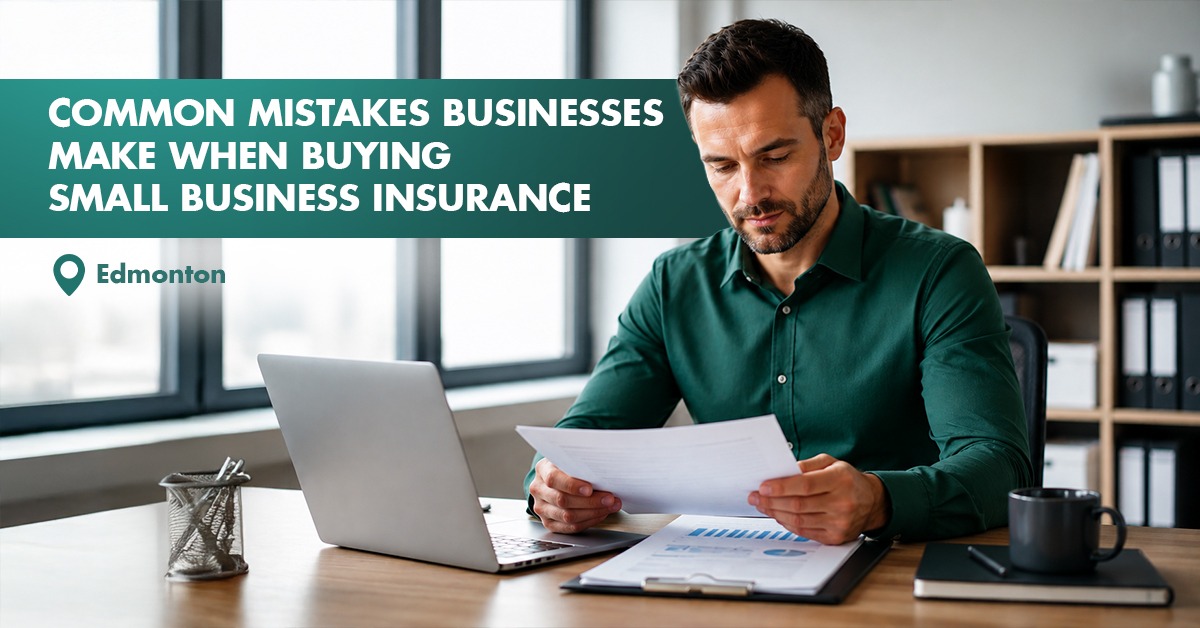
Common Mistakes Businesses Make When Buying Small Business Insurance in Edmonton
Is Your Edmonton Business Safe?
You have insurance. Good.
But is it the right insurance?
Lots of Edmonton business owners think they are covered. Then a claim gets denied.
That is a horrible feeling.
Do not let it happen to you.
What You Need to Know First
Small business insurance in Edmonton is not just a piece of paper.
It is what saves your business.
It saves you after a fire. After a theft. After a lawsuit.
But most Edmonton owners get it wrong.
They pick the wrong plan. They skip key cover. They never check it again.
We have seen this happen many times.
Reliant Insurance Brokers has helped Edmonton businesses for 25 years.
We know what goes wrong. We know how to fix it.
Here are six big mistakes. Avoid them all.
Mistake 1: Picking the Cheapest Plan
You want to save money. That is fair.
But cheap is not always good.
Cheap plans have low limits. They have big deductibles. They have exclusions.
What is an exclusion? It is a reason your claim gets denied.
Here is a real example.
A basic commercial general liability insurance policy in Edmonton costs about $450 a year.
That gives you $2 million in cover.
But one lawsuit can cost far more than that.
Add legal fees on top. Now you are in deep trouble.
Saving $100 on your plan is not smart. Not if it means a $50,000 gap.
Do this instead: Talk to an Edmonton business insurance broker.
Ask what is covered. Ask what is not.
Do not just look at the price.
Mistake 2: Thinking Your Risk Is Low
Your shop is small. Your work feels safe.
So your risk must be low. Right?
Wrong.
All businesses have risk. Big ones. Small ones. All of them.
Here are risks that hit Edmonton small businesses:
- A customer falls at your shop → commercial general liability insurance Edmonton
- Tools or stock get stolen or burn → commercial property insurance Edmonton
- A flood shuts your doors for weeks → business interruption insurance Alberta
- A hacker gets into your files → cyber liability insurance Edmonton
- A client says your work hurt them → errors and omissions insurance Edmonton
- Your staff drive for work → commercial auto insurance Edmonton
Not all of these fit your business. But some do.
Talk to a local Edmonton business insurance broker. They will tell you which ones you need.

Mistake 3: Skipping Business Interruption Insurance
This is the most skipped cover.
It is also the most regretted.
Business interruption insurance in Alberta pays you when a disaster hits. It covers your lost income. It covers your rent. It covers staff wages too.
Think about Edmonton. Winters are harsh. Floods happen. Fires happen.
Your business could shut for weeks.
Your income stops. Your bills do not stop.
No cover means you pay it all yourself.
That can wipe out your savings fast.
Here is the good part.
Your commercial property insurance in Edmonton fixes the damage. Your business interruption insurance pays your lost income. Both work at the same time.
They are a team.
One quick question: Can your business last two months with no money coming in?
If no — get this cover now.
Mistake 4: Buying Online With No Local Help
Online insurance is fast. It is easy.
But it is often wrong.
Online tools do not know Edmonton. They do not know Alberta rules. They do not know your risks.
They give you a generic plan. You click buy. You hope it works.
A local Edmonton business insurance broker is not like that.
They know Edmonton well. They know your market. They know your risks.
They look at plans from many insurers. Then they pick the best one for you.
The Insurance Bureau of Canada says many Canadian small businesses lack proper cover.
Most find out only when they make a claim.
Read more at www.ibc.ca.
At Reliant Insurance we are real people. We are right here in Edmonton.
We learn about your business first. Then we find the right plan.
Mistake 5: Never Updating Your Policy
You bought your plan a few years ago.
You auto-renew each year. You never read it.
Sound like you?
Your business has changed. A lot.
New staff. New tools. Bigger space. New services.
Each change brings new risk.
Your old small business insurance in Edmonton may not cover those new risks.
Or it may cover things you no longer have.
That means you are not getting good value. Not at all.
Here is an easy fix.
Call your Edmonton insurance broker once a year. Look at your plan with them. It takes less than one hour.
It can save you a lot of money.
Mistake 6: Thinking Home Insurance Covers a Home Business
This one shocks a lot of people.
More Edmonton people run businesses from home now.
Most think their home insurance covers their business.
It does not.
Home insurance in Alberta does not cover your business tools.
It does not cover a client who gets hurt at your home.
It does not cover any business liability. None at all.
Work from home even two days a week? You still need proper small business insurance in Edmonton.
The good news is it does not cost much.
Talk to a Reliant Insurance broker today. We will sort it out fast.
Key Numbers to Know
The Canadian Federation of Independent Business (CFIB) did a study. They found many Alberta small businesses lack full cover.
Most said it felt too hard or too costly.
But here is the real number.
The average commercial liability claim in Canada costs between $30,000 and $100,000.
That is far more than good business liability insurance in Edmonton costs.
One claim. No cover. Big trouble.
Source: CFIB → www.cfib-fcei.ca
Get Your Small Business Insurance in Edmonton Right
These six mistakes are very common.
But they are easy to avoid.
You just need the right help.
Reliant Insurance Brokers keeps it simple.
We look at your business. We find your real risks.
We compare commercial insurance quotes from top Alberta providers.
Then we build a plan that fits your budget.
Need business liability insurance in Edmonton? We have it.
Want professional liability insurance in Alberta? We have that too.
Need a full commercial insurance package in Edmonton? Let us talk now.
Do not wait for a bad day. Find out what your policy covers today.
📞 Call us: 1-833-463-2115
🌐 Free quote: reliantinsurance.ca
5 Quick Questions About Small Business Insurance in Edmonton
Q1. How much does small business insurance cost in Edmonton?
Most Edmonton small businesses pay between $450 and $1,000 a year for small business insurance.
Your price depends on your work type, your size, and your cover needs.
The best way to know your small business insurance cost in Edmonton? Get a free quote.
Call Reliant Insurance today.
Q2. Is business insurance required in Alberta?
Some types of small business insurance in Edmonton are required by law.
You must have commercial auto insurance if staff drive for work.
Some jobs need errors and omissions insurance by law too.
As part of your small business insurance plan, many clients and landlords ask for proof of commercial general liability insurance in Edmonton before they work with you.
Q3. What does commercial general liability insurance cover?
It covers claims from injury or property damage.
A customer gets hurt at your Edmonton shop. Your policy pays the legal fees.
It is the base of every small business insurance plan in Edmonton.
Q4. Does my small Edmonton business need cyber liability insurance?
Yes — if you hold any customer data.
Cyber attacks on small businesses are rising fast.
Cyber liability insurance in Edmonton covers legal costs and breach fees.
One attack with no cover can cost tens of thousands of dollars.
Q5. How do I pick the best insurance broker in Edmonton?
Find one who knows Edmonton. Find one who works with many insurers.
At Reliant Insurance Brokers we work with top Alberta providers.
We have helped Edmonton and Sherwood Park businesses for over 25 years.
We are here for you too.
Related: small business insurance Edmonton | commercial insurance Alberta | business liability insurance Edmonton | commercial general liability insurance Edmonton | Edmonton business insurance broker | professional liability insurance Alberta | cyber liability insurance Edmonton | business interruption insurance Alberta
© 2026 Reliant Insurance Brokers | 4924 Roper Road NW, Edmonton, AB T6B 3T7 | 1-833-463-2115 | reliantinsurance.ca
About the Author
Steven
President & CEO | Reliant Insurance Group & Farnese Insurance Brokers
Steven is the President and CEO of Reliant Insurance Group and Farnese Insurance Brokers, bringing more than 13 years of experience across the Canadian insurance and real estate industries.
He holds a Bachelor of Commerce in Entrepreneurship from the University of Alberta and has built his career on making auto insurance more accessible, affordable, and easy to understand for everyday drivers.
Steven leads a team of licensed brokers who compare small business insurance quotes from top Alberta insurers, helping entrepreneurs across Edmonton, Sherwood Park, and surrounding communities build the right coverage for their operations — from commercial general liability and business interruption protection to policies tailored for home-based businesses and contractors.
Comments are closed.