Liability Insurance for Small Businesses in Alberta
Operating a small business in Alberta comes with many moving parts. From managing daily operations in Calgary or Edmonton to serving clients in rural communities, you face unique operational risks every day. A single accident, injury, or unhappy client can lead to expensive legal battles that threaten your hard work. Finding the right Small Business Insurance ensures your company is prepared for these challenges. Understanding Liability Insurance for Small Businesses helps protect your finances, assets, and reputation so you can focus on growing your company..
Key Takeaways
- Core Protection: Small business liability coverage safeguards your financial assets against expensive third-party lawsuits involving bodily injury or property damage.
- Industry Specific: Your specific industry dictates your risk profile, meaning a general contractor requires vastly different coverage limits than an online consultant.
- Cost Variables: Premiums depend heavily on your annual revenue, industry type, past claims history, and your physical location in Alberta.
- Beyond General Liability: General policies do not cover professional mistakes or employee injuries and often require specialized add-on coverage.
- Broker Advantage: Working with an experienced Alberta insurance broker helps identify coverage gaps and compare competitive insurance options.
Insurance Terms You Should Know
Understanding these common insurance terms will help you make informed coverage decisions and better evaluate your business insurance policy.
Premium
The fixed amount your business pays monthly or annually to keep your insurance policy active.
Deductible
The out-of-pocket amount you pay before your insurance provider contributes toward a covered claim.
Liability
Your legal and financial responsibility for causing injury, property damage, or financial loss to another party.
Third-Party Liability
Protection against claims made by customers, visitors, vendors, or members of the public.
Coverage Limit
The maximum amount your insurer will pay for a covered claim under your policy.
Policy Exclusion
Situations, damages, or events specifically excluded from your insurance coverage.
Claim
A formal request submitted to your insurer for financial compensation or legal defense.
Endorsement
An amendment that adds, removes, or modifies coverage within your existing insurance policy.
What Is Liability Insurance for Small Businesses?
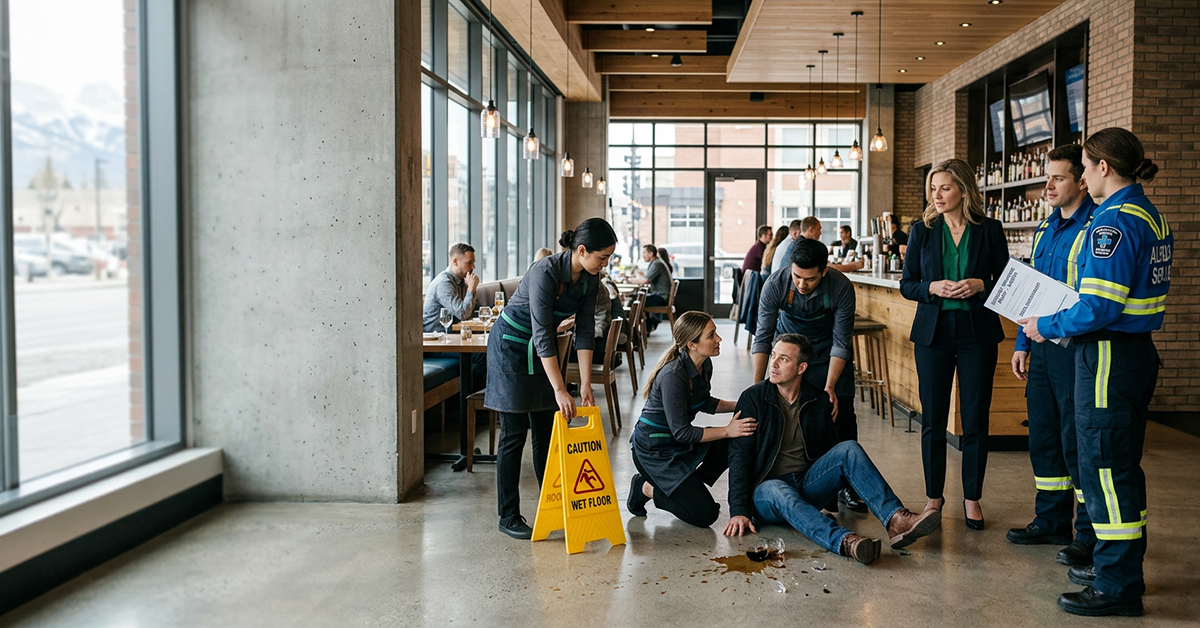
Imagine a customer slips at a retail store in Edmonton during a wet winter morning. The resulting broken hip leads to costly medical bills and lost wages, prompting a lawsuit against the business. Small business liability coverage Alberta acts as your financial shield in these exact scenarios, stepping in to pay for your legal defense, court fees, and any settlements awarded.
Instead of treating insurance like a textbook formula, think of it as a safety plan for everyday mishaps. Whether a contractor renovating a home in Calgary accidentally damages a client’s hardwood flooring or an office visitor trips over a laptop cable, this coverage keeps an accident from draining your company’s bank accounts.
Quick Summary: Liability insurance pays for legal fees and damages if your business is held responsible for injuring someone or damaging their property. It keeps unexpected accidents from causing financial ruin.
Why Liability Insurance Matters
Every entrepreneur in Alberta works hard to build their commercial footprint, but a single legal claim can disrupt everything. In Canada, injured parties can sue for medical expenses, lost wages, and property repairs. Commercial Liability Insurance protects your business assets, secures client contracts, and builds long-term consumer trust.
Many commercial clients, government agencies, and landlords in Alberta require proof of coverage before signing contracts or leases. Having an active policy shows you operate professionally and responsibly. More importantly, it provides peace of mind, knowing your personal savings and business investments are safe from unexpected lawsuits.
CEO Insight
The Reality of Small Business Risks
I often talk to entrepreneurs who believe their business is too small to face a lawsuit. Last year, a small local boutique faced a $45,000 slip-and-fall claim after a customer slipped on a wet entrance floor. Without insurance coverage, that single incident could have erased an entire year’s profit. Smaller businesses are especially vulnerable because they rarely have the financial resources to absorb lengthy legal expenses and settlement costs.
Getting the right liability coverage early can help prevent one unexpected claim from threatening everything you’ve worked to build.
Who Needs Liability Insurance?
Every company that interacts with customers, handles client property, uses physical spaces, or sells products needs liability coverage. Whether you run a storefront in Red Deer or a consulting firm from your home in Lethbridge, you face daily liabilities. It is a common misconception that home-based or digital businesses do not need commercial coverage.
Myth vs Fact
| Myth | Fact |
|---|---|
| My home insurance covers my home-based business. | Standard home insurance explicitly excludes business activities, equipment, and client visits. |
| Digital businesses do not face liability claims. | Online companies can face major lawsuits over data breaches, copyright issues, or misleading advice. |
| Incorporated businesses protect personal assets from all lawsuits. | Courts can pierce the corporate veil, and owners can still face personal financial ruin without insurance. |
Which Businesses Need Liability Insurance?
Different industries face distinct types of operational hazards. For example, a drywall contractor faces physical risks on a construction site, while a marketing consultant faces risks from intellectual property errors. Matching your coverage to your industry ensures you do not pay for unnecessary protections while keeping core risks fully covered.
| Business Type | Recommended Coverage | Core Operational Risk |
|---|---|---|
| Contractors & Trades | General Liability + Tools Coverage | Property damage during renovations, job site injuries. |
| Retail Stores | General Liability + Product Liability | Slip-and-fall injuries, defective product claims. |
| Restaurants | Public Liability + Liquor Liability | Food poisoning, liquor-related incidents. |
| Consultants & Tech | Professional Liability + Cyber Insurance | Data breaches, costly professional errors. |
| Home-Based Businesses | Commercial Liability + Equipment Rider | Client slips during visits, inventory damage. |
| Online Businesses | Product Liability + Cyber Liability | Shipping faulty goods, website hacking issues. |
Types of Liability Insurance for Small Businesses
Small business owners can choose from several distinct types of commercial protection depending on their operations. While General Liability Insurance forms the baseline, adding targeted coverages provides a complete safety shield. Selecting the right combination depends on how you interact with clients and the products you deliver.
General Liability Insurance protects your day-to-day operations against common slips, trips, and accidental damage caused to non-employees. If your business involves providing expert advice, Professional Liability Insurance covers financial losses caused by errors, omissions, or negligence in your services. Meanwhile, Product Liability Insurance safeguards your business if an item you manufacture, distribute, or sell causes illness or injury. For businesses with staff, Employer Liability protects against lawsuits from employees who suffer job-related illnesses or injuries not covered by workers’ compensation.
Expert Tip
Don’t Choose Coverage Based Only on Price
Cheaper insurance policies often come with higher deductibles and more restrictive exclusions. While a lower monthly premium may seem attractive, it can leave your business significantly underinsured when a major liability claim occurs.
Focus on the value of the coverage, policy limits, and protection provided—not just the lowest price.
What Does Liability Insurance Cover?
When a third party sues your business, a standard commercial policy steps in to handle the major financial burdens. It covers your legal defense costs, including attorney fees, witness fees, and official court filings, even if the lawsuit turns out to be entirely groundless. Additionally, it takes care of necessary medical payouts for injured guests and covers the costs to fix or replace property belonging to others that your business damaged.
Quick Summary: This coverage handles legal defense fees, medical bills, and settlement rewards when your business causes bodily harm or property damage to third parties. It covers your defense even if the lawsuit is groundless.
Common Liability Claims Small Businesses Face
Everyday operations can throw unexpected curveballs at business owners. Understanding which common events are covered by your commercial policy and which ones require specialized add-ons helps you avoid severe coverage blind spots.
What Does Liability Insurance Cover?
| Situation | Covered? | Notes |
|---|---|---|
| Customer slips inside store | ✔ Yes |
Covered under standard Commercial General Liability (CGL). |
| Employee injury | ✖ No |
Must be handled through provincial workers’ compensation systems. |
| Damage to client’s property | ✔ Yes |
Standard CGL covers accidental damage to third-party property. |
| Bad professional advice | ✖ No |
Requires a separate Professional Liability Insurance policy. |
| Defective product | ✔ Yes |
Covered if Product Liability is included in your policy. |
| Company vehicle accident | ✖ No |
Requires a dedicated Commercial Auto Insurance policy. |
| Cyber attack | ✖ No |
Requires a separate Cyber Liability policy to cover data breaches. |
What Isn’t Covered?
Commercial policies have specific boundaries to keep premiums affordable. They do not cover intentional damage, illegal activities, auto accidents, or standard employee injuries. Understanding these gaps helps you buy additional policies, such as commercial auto riders or workers’ compensation coverage, to stay fully protected.
For instance, workplace accidents involving your own staff are managed through the provincial workers’ compensation program rather than general commercial policies. Similarly, accidents involving company trucks or delivery cars require a dedicated commercial auto policy. Finally, any damage or fraud committed on purpose by you or your team is completely excluded from coverage.
(For detailed regional employment guidelines, you can consult the official Government of Alberta website to learn more about small business rules.)
How Much Does Liability Insurance Cost in Alberta?
The base cost of commercial protection shifts dynamically based on your specific business environment. While a low-risk home consultant might pay around $35 per month, a commercial roofing contractor faces much higher operational hazards and will pay significantly more. Requesting a customized business insurance quote is the most accurate way to determine your exact costs.
Typical Liability Insurance Costs in Alberta
| Business Type | Typical Annual Premium Range | Risk Level |
|---|---|---|
| Consultant | $400 – $700 | Low |
| Home-Based Business | $500 – $800 | Low to Medium |
| Retail Store | $750 – $1,500 | Medium |
| Restaurant | $1,200 – $3,000 | High |
| Contractor | $1,500 – $4,500+ | High |
It is important to remember that these price ranges are estimates. Your final premiums will vary depending on your chosen insurer, annual revenue, claims history, payroll size, specific industry, and your selected coverage limits. Gathering multiple customized quotes ensures you find the right fit for your budget.
Quick Summary: Alberta small business liability premiums generally run between $450 and $1,200 annually for standard operations. High-physical risk trades will pay more, while online consultants qualify for lower base rates.
CEO Insight
The Danger of Outdated Revenue Numbers
I often see small business owners provide outdated or underestimated revenue figures to reduce their insurance premiums.
In one case, a contractor experienced significant business growth but failed to update their policy during the year. When a flooring damage claim was submitted, the insurer reviewed the company’s financial records and reduced the payout because the business had been underreported.
Keeping your revenue information current helps ensure your coverage accurately reflects your operations and avoids unexpected issues during the claims process.
Review your policy regularly and update your broker whenever your business grows or changes.

Factors That Affect Premiums
Insurance companies look at several core details to calculate your business risk level. High-risk industries with frequent customer contact naturally pay more than quiet home offices. Understanding these pricing factors helps you manage your business risks and reduce your insurance expenses over time.
Your industry type plays a massive role; high-physical risk businesses like roofing pay more than low-physical risk fields like graphic design. Furthermore, higher annual revenue and payroll mean more client interactions, which increases the statistical odds of facing a claim. Finally, keeping a clean record with zero past claims helps you qualify for lower insurance rates, while operating in high-crime or busy commercial zones can raise base premiums.
Expert Tip
Keep Detailed Incident Records
If an accident happens on your business property, document it as soon as possible.
Take clear photos of the scene, collect witness statements, record the date and time, and preserve any available security camera footage.
Well-organized documentation can strengthen your claim, help your insurance broker present accurate information, and reduce the risk of disputes or fraudulent claims.
Good records today can make the claims process faster, smoother, and more accurate tomorrow.
Common Mistakes Business Owners Make
The most common mistake Alberta entrepreneurs make is assuming a general policy covers every type of business risk. For example, a consultant in Red Deer might provide incorrect software advice that results in severe financial loss for a client. A standard general liability policy will not cover that scenario; it specifically requires professional liability protection.
Failing to review your insurance coverage as your business grows also creates major risks. If you buy new equipment, hire staff, or open a second storefront without telling your insurer, your active policy might not cover those new assets. Regular communication with an experienced advisor prevents these costly protection gaps.
How to Choose the Right Liability Insurance Policy
Choosing the right policy requires a clear look at your daily business operations and client exposures. Begin by reviewing your client contracts, as many corporate partners require specific liability limits before you can start working. Next, choose a deductible that fits your monthly cash flow comfortably without breaking your budget.
Liability Insurance Checklist
- Identify your business risks: List all physical, digital, and professional hazards your business faces daily.
- Review client contract requirements: Check if your clients require specific coverage amounts before you sign.
- Compare policy limits: Ensure your total coverage matches the current value of your business assets.
- Understand exclusions: Read the fine print carefully so you know exactly what your policy will not cover.
- Review annually: Schedule a yearly update with your advisor to adjust your coverage as your business grows.
Why Work With an Alberta Insurance Broker
Navigating commercial insurance options on your own can be confusing and time-consuming. An independent Insurance Broker Alberta specialist represents you, not the insurance companies. They review your operations, explain complex policy terms in plain language, and gather quotes from multiple Canadian providers to find you the best value.
Brokers also provide vital support when you need to file a claim. They help you complete the paperwork, talk to insurance adjusters, and fight to get your claim settled fairly. Having a local professional on your side protects your interests so you can focus on running your business.
(For broader small business resources and advocacy tools across Western Canada, owners can check out the Canadian Federation of Independent Business (CFIB) platform.)
Expert Tip
Notify Your Broker When Your Business Changes
Moving offices, launching a new product line, or offering different services changes your risk profile. Always call your broker before making major shifts to ensure your insurance policy stays valid and active.
Reliant Insurance helps Alberta small business owners protect their hard work with tailored, affordable commercial coverage. Our experienced brokers analyze your unique industry risks, compare top Canadian insurance providers, and build clear policies with no hidden surprises. Partner with Reliant Insurance today to secure your company’s financial future.
Frequently Asked Questions
What is the difference between General Liability and Professional Liability?
General liability covers physical mishaps like client slips and accidental property damage. Professional liability covers financial losses caused by mistakes, missed deadlines, or poor advice in your professional services.
Does Liability Insurance for Small Businesses cover my own tools?
No, basic Alberta business liability insurance quotes only covers third-party property damage. To protect your own tools, inventory, or electronics, you need to add commercial property or inland marine coverage to your policy.
Can I cancel my commercial insurance policy if my business slows down?
You can cancel your coverage, but it leaves your business completely vulnerable to lawsuits from past work. A better path is speaking with an Insurance Broker Alberta specialist to adjust your coverage levels and lower your costs safely.
How much third-party liability coverage does an Alberta small business need?
Most small companies carry a minimum of $2 million in third-party liability for Alberta businesses coverage. If you work in high-risk construction trades or handle expensive client assets, you may need $5 million or more to meet client contract rules.
Does a home-based business need Commercial Liability Insurance in Alberta?
Yes, because standard home insurance policies explicitly exclude commercial claims. If a client visits your home office and falls, or if your business inventory is stolen, your home policy will reject the claim.
Is liability insurance legally required in Alberta?
While the province does not legally mandate general liability for all businesses, operating without it is highly risky. Furthermore, most commercial landlords, professional associations, and clients will legally require proof of coverage before doing business with you.
Can I bundle liability insurance with other business insurance policies?
Yes, you can bundle your coverages. Most insurers offer a Business Owner’s Policy (BOP) that combines general liability, commercial property, and business interruption insurance into a single package, which usually saves you money on premiums.
Where can I find official resources on Canadian small business insurance standards?
You can check the Insurance Bureau of Canada (IBC) website for official guides on commercial insurance standards and risk management tools across Canada.
Conclusion
Securing your business isn’t just about purchasing a policy; it’s about matching your coverage to the actual risks you encounter every day on the ground. A single accident can happen in a flash, but a gaps-and-all policy review ensures it won’t derail your hard work. Take the time to look over your client contracts, update your revenue figures honestly, and sit down with a dedicated local expert. By taking these practical steps today, you protect your cash flow, secure your reputation, and build a resilient foundation for the future.
About the Author
Steven
President & CEO | Reliant Insurance Group & Farnese Insurance Brokers
Steven is the President and CEO of Reliant Insurance Group and Farnese Insurance Brokers, bringing more than 13 years of experience across the Canadian insurance and real estate industries.
A proud University of Alberta Bachelor of Commerce graduate specializing in Entrepreneurship, he has dedicated his career to making insurance more accessible, affordable, and transparent for businesses and individuals alike.
Through innovation and customer-focused leadership, Steven works alongside a team of experienced professionals to simplify complex insurance decisions and deliver tailored coverage solutions that help small business owners across Western Canada protect what matters most.
Comments are closed.